Early-bird ticket sales have begun for SYCL 2026. You can find all the important information on the conference site in condensed format. In this long-form blog post, you’ll find background information for some of the decisions I’ve made and my personal thoughts.
The conference takes place October 3-6 in the Metro Vancouver area. I originally planned it for June, had the venue figured out and started announcing, but learned that FIFA was taking place at the same time in Vancouver. This was not going to work because hotel rates were massively inflated on the dates I selected, and I imagine flights would have been affected similarly. Moving it to late summer meant these costs were still pretty high, and introduced a possiblity of forest fires affecting air quality. Early October felt right. It should be cool, not too rainy, and more affordable for those traveling from far off places.
Your tickets include lunch. I’ve provided a form entry for dietary restrictions on checkout and from there I’ll make sure everyone’s needs are met.
I’ve opted for a simpler purchase model where you select which days you wish to attend. I was able to save money on facility costs by having the event outside the city centre, and this has equated to roughly the same ticket cost while including lunch and a PCB Badge.
When you purchase tickets, you’ll receive an email containing a QR code to scan at the door, a calendar link for the parts of the conference you’re attending, and a link to a page for filling in details for your paper badge.
Until July 1st you can buy a ticket at early-bird prices. That’s when the full roster of speakers and their talks will available. Early bird pricing does not apply to workshops.
The Badge
Attendees of Tables Day (Sunday) will receive a SYCL Badge V2.
It will look very similar to the Badge from 2024, but has significant hardware and software upgrades that were implemented as a UBC capstone project.
The group of students were awesome to work with. They took my high level requirements and minimal guidance, and took the Badge to the next level.
They are:
And here is an amazing video they made for their project:
Upgrades
The captsone team had to deal with requirements imposed on us by supply chain changes that have taken place in the last couple years. I am unable to manufacture the V1 boards because parts are obsolete, no longer ship to Canada, or are significantly more expensive due to tariffs. The team handled all these challenges and delivered a better overall product.
Loadable carts!
The dream for the Badge was for it to be able to install multiple applications and switch between them, and the capstone team has delivered yet again.
For SYCL 2024 I had spent so much time on the hardware that the firmware was barely working on the day of the conference. I had even cancelled my travels to make sure this was working. It was largely jacobly who really got the firmware to a place where it could run applications as fast as it should.
The problem was that the “OS” layer, the part between the cart API and hardware, was statically linked to your application. At the previous conference, you could share your code, but someone would have to completely reflash their board to run that single application. This conference, you’re going to be able to install multiple apps on your Badge from your homies.
RP2350
With this Badge comes a hardware upgrade from the ATSAMD51J19A to the popular RP2350. This significantly cuts back on cost because the ATSAMD is getting old, and there’s limited supply. The RP2350 is less than half the cost and comes with these other benefits:
- 2 processor cores
- Cortex M4F -> M33
- Clock: 120MHz -> 150MHz
- RAM: 256KB -> 520KB
- Flash: 512KB -> 4MB
- Robust booting from USB
Batteries
With this Badge we’re dropping Lithium-Polymer (LiPo) batteries in favour of good ol’ AAAs. This might seem like a backwards step, but the tradeoffs are worth it. We give up the convenience of charging the battery while USB is connected, but we end up saving roughly $10 CAD per Badge and eliminate the pain of sourcing the LiPo batteries. Attendees should take this as a challenge to make applications that are not just cool as hell, but low-power too. I will have extra batteries if you need them.
The Badge is a fork of the Adafruit PyBadge, which is where the use of LiPo batteries came from in the first place. These are common for wearable electronics because they are small, rechargable, and can output decent current.
The challenges I had sourcing Lipo batteries this year were getting the right size battery, with a matching connector, for a reasonable price, and in the right quantities. Adafruit doesn’t seem to have stock on the LiPo battery sizes I’m interested in, suppliers like Digikey or Mouser will not ship them to Canada anymore, and what I could find in Canada is roughly twice the cost as what I was expecting.
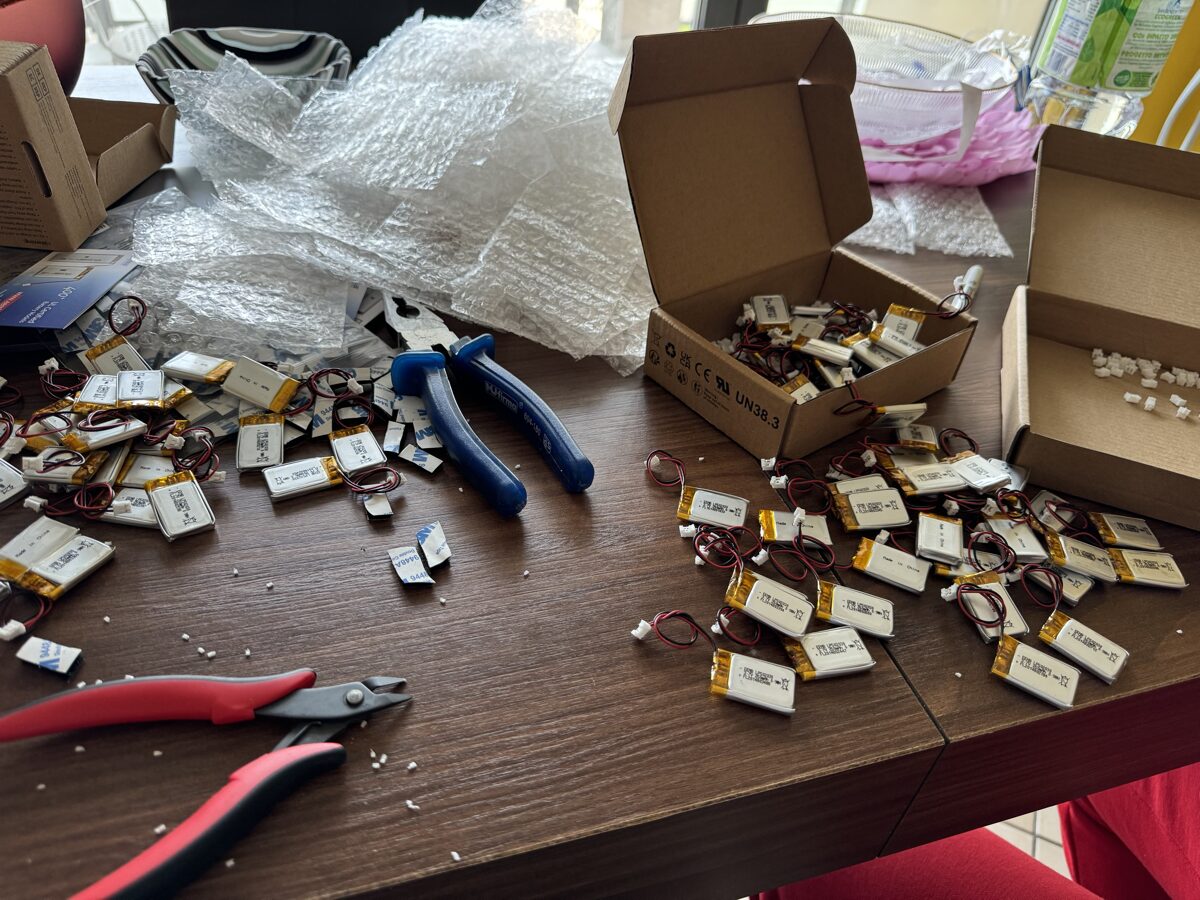
Back in 2024 we had a separate adventure for the V1 Badge. And by we, I mean Loris. One of the things inherited from the original design is that the Adafruit LiPo battery connectors are wired up in reverse polarity compared to what you typically find on the market. Loris was unable to order from Adafruit to Italy, and thus sourced them from a European vendor. Due to the connector being reversed, he then had to convert each of the 125 battery connectors over to the right polarities by destroying the connector housing, and inserting the crimped wires into a new one:
With this context, I hope people will understand and agree with the design change.
Venues
With this rescheduling brought an opportunity to change the location. Emily Carr University is where we hosted the last SYCL in Vancouver, but fall semester is going to be in full swing. The areas we’ll be in are called Coquitlam and Port Moody. The workshop venue is TBD, but should be in this same area.
Site B (Sunday)
Site B is a locally owned coworking and event space in Port Moody, near the Moody Centre Skytrain station. It’s where we are going to host our Tables Day.
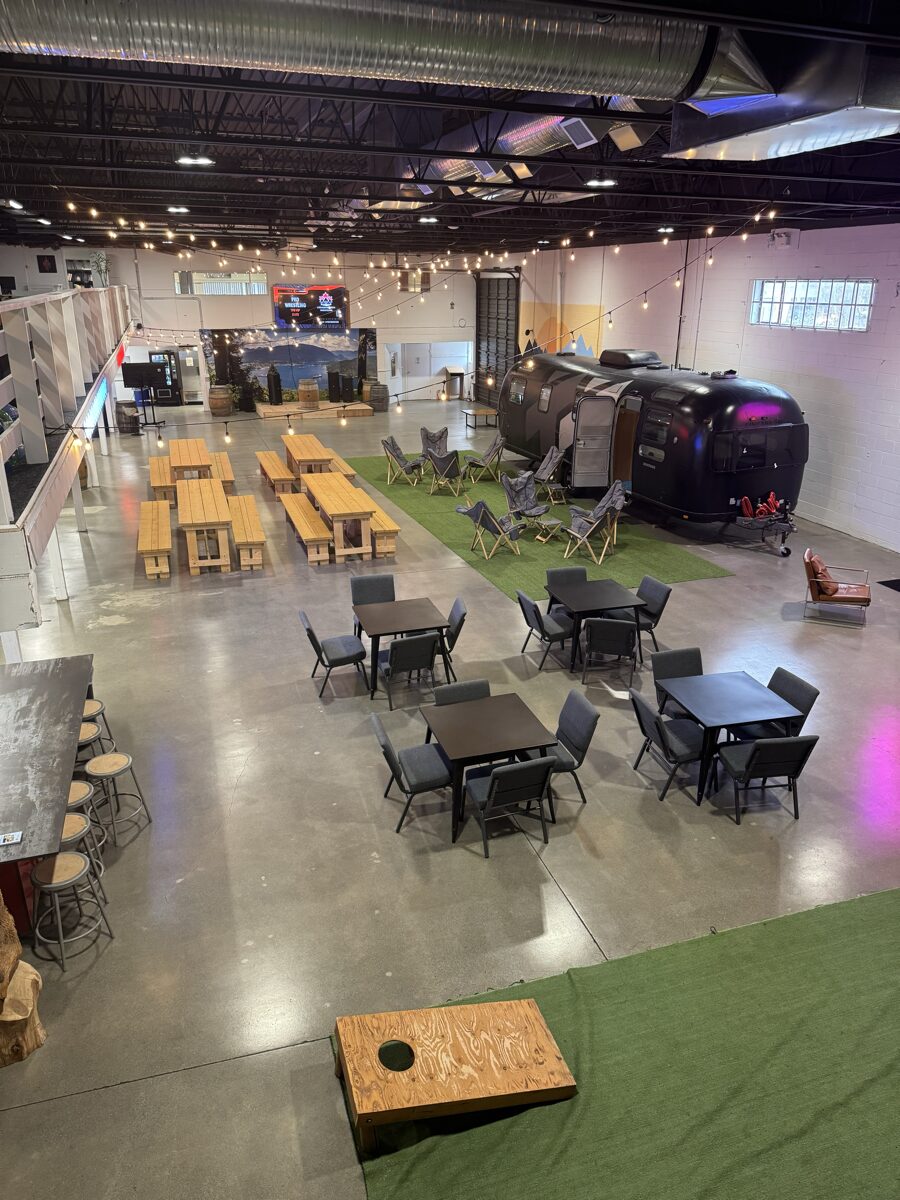
Just up the street is “Brewer’s Row”. It’s a collection of breweries, one distillery, food trucks, an ice cream shop, and a waterfront park. It is local custom to visit each in that order. There’s also a skate park, because I know we’ve got some sk8ers attending.
Evergreen Cultural Centre (Monday and Tuesday)
Evergreen Cultural Centre is right next to Lafarge Lake-Douglas Skytrain station.
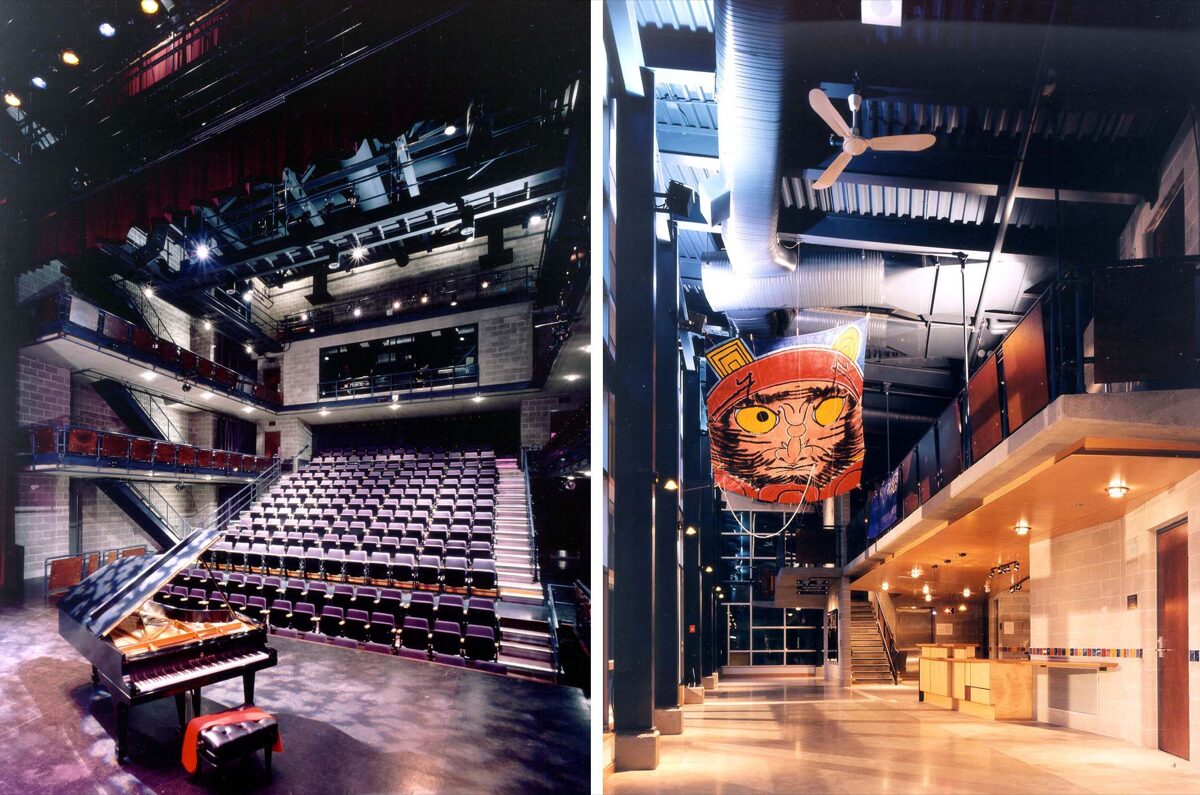
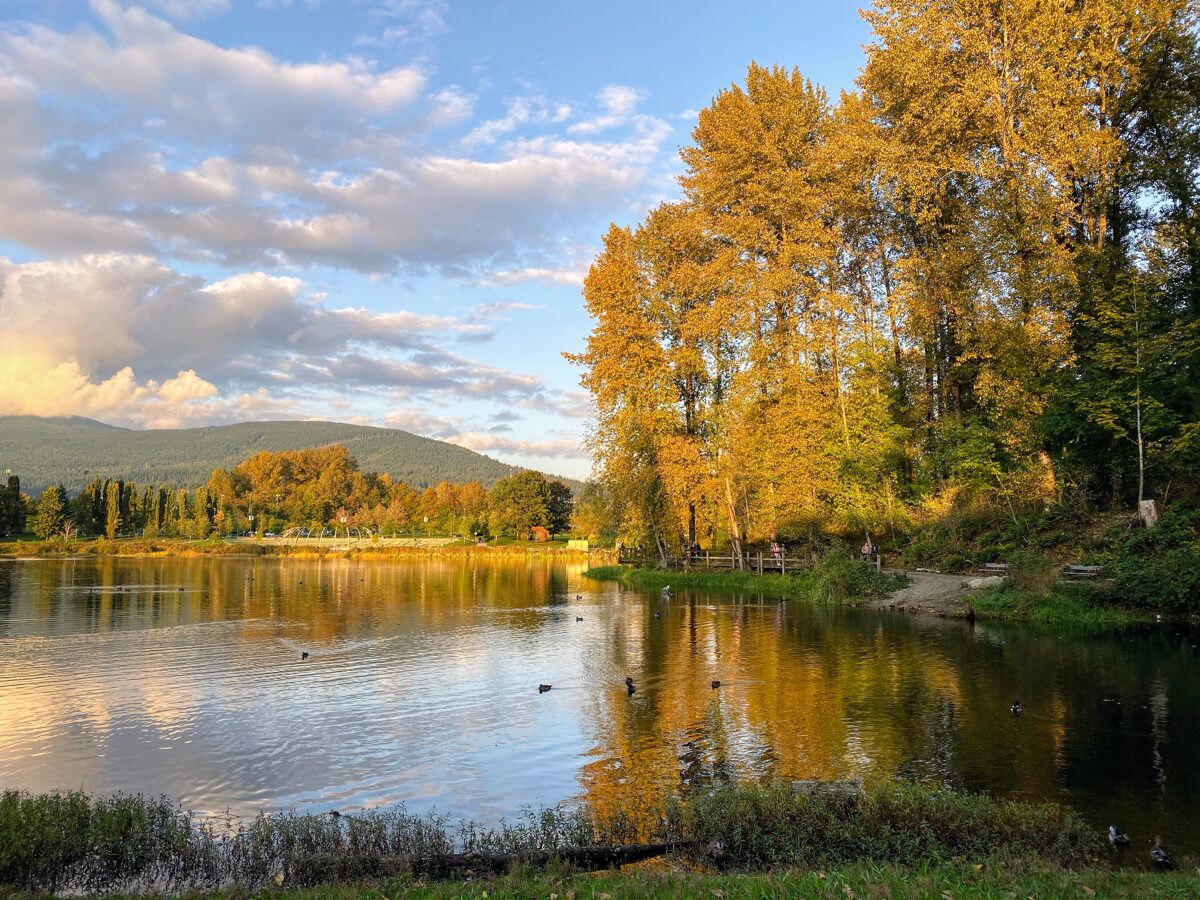
And as the Skytrain station name implies, it’s next to Lafarge lake park. Really great place to go for a walk and enjoy nature.
Talk submission progress
Submissions have been progressing well, however I could use more SYCL talk proposals. There is a certain essence I’m looking for here, and if I don’t get enough submissions that hit the mark, I will let the systems talks bleed into to SYCL talks day.
A note on AI talks
I neither dislike or like LLMs, I’ve been through the emotional rollercoaster and have consumed more LLM content than I need to. I use them often, for code and research, but never for writing, I will speak for myself. I expect the same from my speakers, attendees are not interested in generated talks.
Here’s the thing about this conference: it’s really just me, mattnite, putting this on. My job is to curate talks that I think are cool. If you have a talk proposal about LLMs that’s cool and on topic, hell yeah. If it’s going to sum up to “I can mostly do the same thing but faster”, well, that’s entirely uninteresting to me and the people who attend this conference.
Sponsors
I am open to having sponsors to help cover costs of the speakers’ dinner. The conference is financially self-sufficient through ticket sales. I like it that way so that we can responsibly discuss our industry. Many organizations align with those values, and if you’re part of one, feel free to email me.